
Jackleg or antivandal: which site cabin do you need?
The same fit-out inside, a different shell outside. How the two builds differ, when each one is the right choice, and why most large compounds use both.
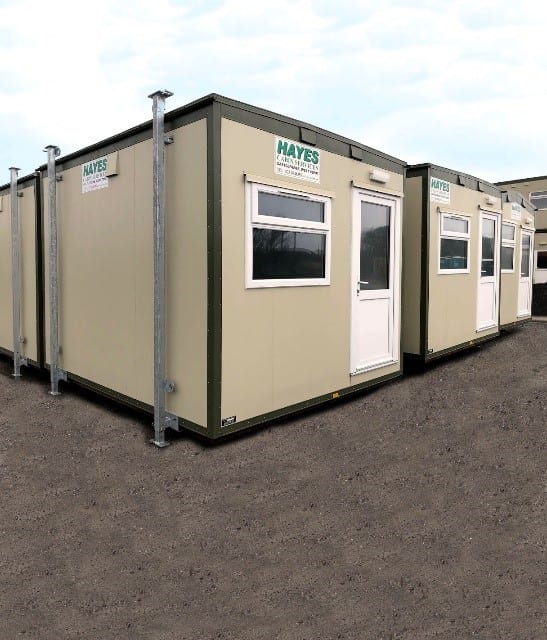
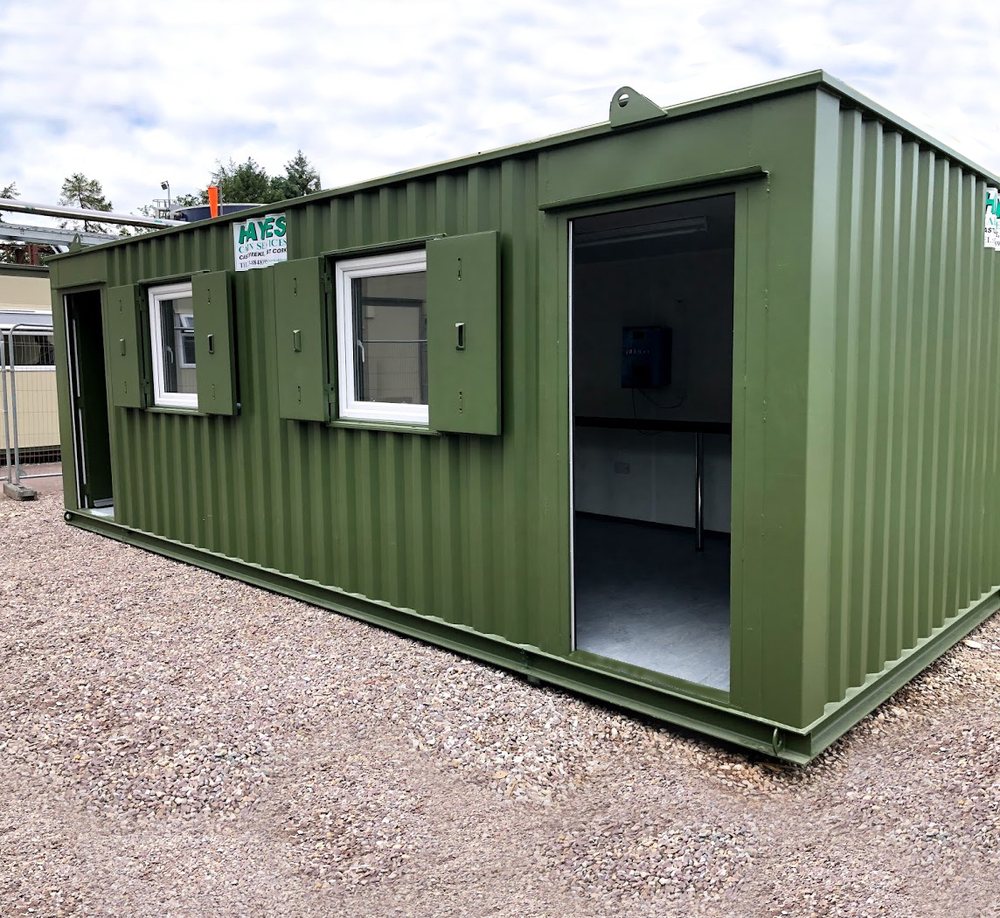
Both are portable site cabins with the same fit-out inside: insulated, lined, wired, lit and heated. The difference is the shell. A jackleg cabin is a timber-framed cabin clad in plastisol-coated steel, carried on four galvanised steel jacklegs. An antivandal cabin is a fully welded steel box: 2mm pressed steel walls on a rolled steel base, with steel security doors and shutters over every window.
If the cabin is for people to work in every day on a site that is fenced, manned or locked overnight, choose jackleg. If the cabin will be left unattended out of hours, sits on an open or rural site, stays for a year or more, or your client’s procurement specifies steel security construction, choose antivandal. Most large compounds use both.
What a jackleg cabin is
A jackleg cabin is a portable, fully fitted cabin carried on four adjustable steel legs, or jacks, that let the driver level it on uneven ground without a prepared base. It is the cabin most sites start with, from pharmaceutical and energy projects to events, and Hayes builds it to a higher specification than the usual hire unit. Each cabin is built on a C24 pressure-treated timber frame with a 52mm pressed wall panel, clad outside in leather-grain plastisol-coated steel and lined inside with 12.5mm vinyl-faced plasterboard.
Two roof profiles are available. The standard convex roof runs tapered joists under a seamless membrane, so rainwater sheds without gutters. The apex roof is a pitched steel proclad roof that adds internal headroom and a more finished look. Every jackleg cabin on the site is listed in both versions.
- Floor: 125 x 47mm C24 joists, insulated between, 18mm OSB3 tongue-and-groove deck, anti-slip Mipolam floor covering.
- Walls: 40 x 95mm C24 studs, 52mm pressed panel with a high-density EPS core, plastisol steel outside, plasterboard inside.
- Roof: 175 x 47mm tapered C24 joists, 100mm mineral wool, seamless membrane over 11mm OSB3, ventilated plasterboard ceiling.
- Doors and windows: 44mm insulated steel pass door with 8-point locking, white uPVC double-glazed windows with trickle vents. A uPVC door is available instead.
- Inside: fully pre-wired, LED lighting, Lot 20 compliant electric panel heaters, white PVC trim throughout.
See the full range on the Jackleg Cabins page.
What an antivandal cabin is
An antivandal cabin, sometimes written anti-vandal, is built to resist forced entry, impact and weather on sites where nobody is watching it. The base is a fully welded frame of 125 x 65mm rolled steel channel with Z-section side runners, integrated jacklegs and lifting points top and bottom. Galvanised steel joists at 400mm centres carry a 25mm plywood deck. The walls are 2mm block-pressed mild steel on 3mm pre-galvanised corner posts, fully welded and painted with a high-zinc-phosphate container coating.
Security is in the openings. Antivandal cabins have heavy steel security doors and steel shutters on every window, so the cabin can be locked down completely at the end of the shift. A 32A external inlet feeds a metal-clad RCD consumer unit, which means the cabin can be powered up the day it lands.
- Base: welded 125 x 65mm rolled steel channel, Z-section runners, integrated jacklegs, top and bottom lifting points.
- Floor: 3mm profiled galvanised steel joists at 400mm centres, 40mm high-density insulation, 25mm plywood deck, Polyflor Polysafe safety flooring.
- Walls: 2mm block-pressed mild steel, 3mm corner posts, high-zinc-phosphate coating, insulated and lined with plasterboard carrying a half-hour fire rating.
- Roof: flat steel roof with top lifting ears.
- Doors and windows: heavy steel security door, steel window shutters.
- Inside: 32A inlet, metal-clad 6-way RCD consumer unit, Lot 20 compliant panel heater, PVC trim.
See the full range on the Antivandal Cabins page.
Jackleg vs antivandal: side by side
| Feature | Jackleg cabin | Antivandal cabin |
|---|---|---|
| Shell | Plastisol-coated steel over a 52mm pressed panel on a C24 timber frame | 2mm block-pressed mild steel, fully welded, high-zinc-phosphate coating |
| Base | C24 timber joists and runners, four galvanised steel jacklegs | Welded rolled steel channel, steel joists, integrated jacklegs, lifting points top and bottom |
| Roof | Convex membrane as standard, or pitched apex steel proclad | Flat steel with top lifting ears |
| Doors | 44mm insulated steel pass door, 8-point locking, or uPVC | Heavy steel security door |
| Windows | White uPVC double-glazed with trickle vents | Windows protected by steel shutters |
| Power | Fully pre-wired, sockets and lighting | 32A external inlet to a metal-clad RCD consumer unit |
| Inside | Insulated, 12.5mm plasterboard, Lot 20 panel heaters, LED lighting | Insulated, 12.5mm plasterboard, Lot 20 panel heater, lighting |
| Weight and handling | Lighter, quicker to land and move | Heavier, built to stay put |
| Cost | Lower hire rate and purchase price | Higher, reflecting the steel shell |
| Best for | Daily-use offices and canteens on serviced, secured sites | Unattended, open or rural sites, long-duration hires, procurement that specifies steel |
When to choose a jackleg cabin
Jackleg is the right call when the cabin is a workplace first. It costs less to hire or buy, lands quicker, and the double-glazed windows and pitched apex option make it the more comfortable room to spend a day in. Pick jackleg when:
- the site is fenced, has a gate that locks, or is manned around the clock;
- the cabin is an office, canteen, meeting room or drying room used every working day;
- the hire is short or medium term and may move between sites;
- budget per week matters more than out-of-hours security;
- you want the extra headroom and finish of an apex roof.
A typical example is a 24ft x 10ft jackleg office, which has room for about six desks and is also available as a 24ft x 10ft jackleg office with an apex roof.
When to choose an antivandal cabin
Antivandal is the right call when the cabin will spend time with nobody near it. Pick antivandal when:
- the site is open, rural, or not secured outside working hours;
- the cabin holds tools, materials or records and is locked at night and weekends;
- the job runs a year or more, so the shell has to shrug off weather and knocks;
- the cabin is a security hut at the gate, a store, or a toilet block that stands apart from the main compound;
- your client’s procurement names steel security construction as standard. Pharmaceutical, manufacturing and engineering clients often do.
A typical example is a 24ft x 10ft antivandal office for the same six desks, or a 10ft x 10ft antivandal security cabin at the gate.
Does antivandal feel different inside?
No. Both builds are insulated, lined with 12.5mm plasterboard and fitted with Lot 20 compliant panel heaters and lighting. Office, canteen, meeting room and drying room layouts carry the same fit-out whichever shell you choose: canteens get a sink unit and under-counter water heater, drying rooms get benches, coat hooks and ventilation. The only thing the person inside notices is the shuttered windows, which can be opened during the day.
Mixing both in one compound
You do not have to pick one for the whole site. The common pattern on larger projects is jackleg for the offices and canteen where the team spends the day, and antivandal for the stores, the gate hut and the toilet blocks where security matters. Both builds link end to end or side by side, and door positions and power inlets are planned before delivery so the units arrive ready to join. The Site Accommodation page shows how compounds are put together, and the Toilets and Showers range comes in both shells too.
Sizes, layouts and floor area
Both ranges run from 8ft x 8ft to 40ft x 12ft, with the antivandal range adding a 6ft x 5ft security hut. Layouts are office, canteen, drying room, meeting room, security, open plan and split units with two rooms. Usable floor area is the interior measurement, after the walls, which is the figure that decides how many desks or seats fit.
| Exterior size | Usable floor area | Typical use |
|---|---|---|
| 10ft x 10ft | 8.3 m² | One to two desks, or a security hut |
| 12ft x 10ft | 10.1 m² | About two desks, or a canteen for about six |
| 16ft x 10ft | 13.6 m² | About three desks, or a canteen for about ten |
| 20ft x 10ft | 17.1 m² | About five desks, or a canteen for about fourteen |
| 24ft x 10ft | 20.6 m² | About six desks, or a canteen for about sixteen |
| 30ft x 10ft | 25.9 m² | Larger office or canteen |
| 40ft x 10ft | 35.2 m² | Open plan office or split unit |
| 40ft x 12ft | 42.0 m² | Largest single unit, open plan or split |
Not sure what fits? The Cabin Designer lets you pick a size, drop in desks, canteen tables, benches and partitions to scale, and send the plan to the office for a quote.
Hire or buy
Both builds are available for sale or hire. Hire works on weekly or monthly rates with delivery and collection included. Sale is a one-off purchase and the cabin is yours to move between jobs. As a rule of thumb, a project under about 18 months usually works out cheaper on hire, and anything longer is worth pricing both ways. Antivandal cabins are often bought rather than hired because the shell suits long-term use. The office will quote sale and hire side by side on request.
Delivery is the same for both
Every cabin is delivered nationwide from West Cork on a truck-mounted crane. The crane is on the vehicle, so you do not need a crane or forklift on site, only access for the truck and a clear spot for the cabin. Most deliveries are scheduled within 48 to 72 hours of order confirmation, subject to stock and route. A risk assessment, method statement and lift plan produced by our appointed person are issued in advance of every delivery, and all lifting equipment is GA1 certified. Access is checked before the truck leaves: send the Eircode and a couple of photos of the gateway and we will confirm it fits. The Our Fleet page explains the trucks and the powersteer trailer used for tight sites.
Common questions
Which is cheaper, jackleg or antivandal?
Jackleg. The timber frame and plastisol steel shell cost less to build than a fully welded steel box, so the hire rate and the purchase price are both lower. Antivandal costs more and is chosen for security and durability, not price.
Can an antivandal cabin have an apex roof?
Antivandal cabins have a flat steel roof with lifting ears as standard. The apex steel proclad roof is an option on the jackleg range, where every size and layout is listed in both roof versions.
Do I need a prepared base for either cabin?
No. Both builds stand on jacklegs that the driver adjusts to level the cabin on uneven ground. You need firm ground that will take the weight and clear access for the truck. The team checks ground conditions and access before the truck leaves West Cork.
Can jackleg and antivandal cabins be linked together?
Yes. Both link end to end or side by side with door openings or covered walkways, and they ship on the same delivery. Door positions and external power inlets are planned with you in advance so the units arrive ready to join.
How quickly can a cabin be delivered?
Most deliveries are scheduled within 48 to 72 hours of order confirmation, subject to stock and route. Specialist modifications and bespoke builds take longer. A firm date is confirmed in writing before invoice.
Sources
- Hayes standard jackleg cabin specification, 2026 (PDF)
- Hayes anti-vandal cabin specification, 2026 (PDF)
- Lot 20 refers to Commission Regulation (EU) 2015/1188 on ecodesign requirements for local space heaters.
- Floor areas are interior measurements from the Hayes cabin catalogue, after an 85mm wall each side.